
How to make a power of attorney from abroad that works in Egypt: through the Egyptian consulate, or a foreign one legalized and deposited at the notary.
"I live abroad and need a lawyer or a relative in Egypt to handle something for me. How do I make a power of attorney that will be accepted there?" We get this question from Egyptians abroad and from foreigners with interests in Egypt alike. There are two routes, and choosing the wrong one can cost you weeks. Here is how each works.
If you are Egyptian and live near an Egyptian embassy or consulate, this is usually the easiest route. You go to the consular section with your passport or national ID and the details of the agent and of what you want the power of attorney to cover, and it is issued there.
A consular power of attorney is issued by an Egyptian authority, so it is generally used in Egypt without the extra legalization steps. Check with the consulate in advance about the required documents and whether you need an appointment.
This is the route for foreigners, or for anyone who can't use the Egyptian consulate. Some consulates only issue powers of attorney to Egyptian citizens, which is a problem many foreign clients run into.
The steps are usually:
Sign the power of attorney before a notary in the country where you live.
Have it authenticated by that country's foreign ministry.
Have it legalized by the Egyptian embassy or consulate in that country.
Once it reaches Egypt, legalize it at the Egyptian Ministry of Foreign Affairs.
Translate it into Arabic at an approved translation office if it is in another language.
Deposit it at the notary office through a deposit record (محضر إيداع) so it can be used before government bodies.
It is the procedure that makes a foreign power of attorney usable in Egypt. The power of attorney, with its legalizations and translation, is recorded at the notary office, and you get an official copy that the agent can use with courts and government offices.
The required documents and how long it takes can differ from one office to another, so it's worth checking before you go, or letting your lawyer handle it.
Whichever route you take, the power of attorney is only as useful as its wording. A power of attorney for lawsuits doesn't allow selling property, and a power of attorney to sell a specific apartment doesn't cover another one. State exactly what you want the agent to do, and avoid giving wider powers than you need. Read more about the general power of attorney for lawsuits and the power of attorney to sell to oneself.
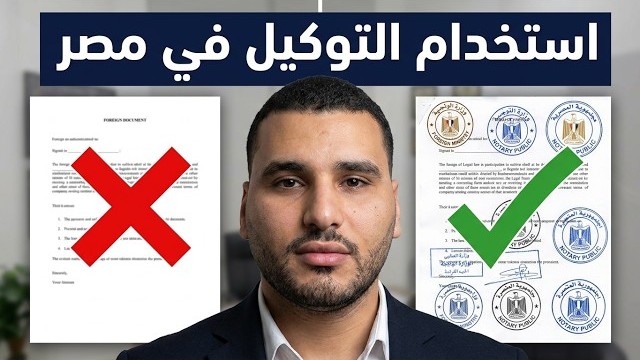
We work with Egyptians and foreigners abroad every day, in Egypt and Saudi Arabia. In this video, Mr. Salah Ellwaa explains foreign powers of attorney and the deposit record:
Contact us before you sign abroad, and we'll send you the right wording for what you need.
Use the foreign route: sign before a local notary, get it authenticated and legalized by the Egyptian embassy, then legalize it in Egypt and deposit it at the notary office.
Usually the agent named in the power of attorney or a lawyer submits it. Contact us to check what your case needs.
It can be quick once all the documents are complete, but it depends on the office. Prepare the legalizations and translation in advance.
It stays valid until it is cancelled or its purpose is done, unless it states a time limit. Some bodies may ask for a recent copy, so keep it updated.
Cancellation procedures depend on where it was issued and deposited. Contact us and we'll tell you the right steps for your case.